
How to Maintain Commercial Espresso Machines

Table of Contents
Daily Cleaning Routine for Commercial Espresso Machines
Backflushing the Group Head
Cleaning the Portafilter and Filter Basket
Steam Wand Sanitization
How to Backflush an Espresso Machine
Weekly Cleaning and Maintenance Tasks
Cleaning the Drip Tray and Surrounding Area
Water Reservoir and Filter Checks
How to Descale a Commercial Espresso Machine
Monthly Maintenance and Preventive Care
Inspection and Performance Checks
Exterior Surface Cleaning
Commercial Espresso Machine Troubleshooting and When to Call a Technician
Creating a Commercial Espresso Machine Maintenance Schedule
Frequently Asked Questions
Last Updated: October 4, 2026
Daily Cleaning Routine for Commercial Espresso Machines
To maintain commercial espresso machines, start with daily cleaning. This is non-negotiable if you want consistent shots and reliable equipment. A machine that runs dirty breaks faster, pulls worse shots, and costs more to repair.
The daily routine takes 15-20 minutes and prevents buildup that clogs group heads, damages seals, and throws off brewing temperature.
Backflushing the Group Head
Backflushing is the single most important daily task. It forces water backward through the group head to flush out coffee residue and oils that normal brewing can't remove.
Here's how to backflush properly:
Insert a blind basket (no holes) into the portafilter
Lock the portafilter into the group head
Turn on the pump for 2-3 seconds, water sprays out
Turn off the pump immediately
Repeat this on-off cycle 5-6 times
Remove the portafilter and wipe the group head with a damp cloth
The blind basket is critical. Without it, water just flows through normally and you're not actually flushing anything. The pressure builds up and forces water backward, which is what cleans the internal passages.
Backflushing takes 30 seconds per group head and saves hundreds in repairs. Do this between every 5-10 shots during service and always at shift end.
Cleaning the Portafilter and Filter Basket
The portafilter and filter basket collect more residue than any other part of the machine. Dried coffee oil builds up fast and affects extraction.
Clean these items daily:
Remove the filter basket from the portafilter
Rinse both under hot running water
Use a soft brush to scrub the basket's mesh, coffee grounds stick here
Wipe the portafilter handle and spout with a damp cloth
Dry everything before the next use
Don't use abrasive scrubbers on the basket. You'll damage the mesh. A soft brush and hot water do the job. If buildup is stubborn, soak the basket in hot water for 5 minutes, then brush again.
Steam Wand Sanitization
The steam wand is where milk residue accumulates. Milk proteins coagulate fast and create a breeding ground for bacteria. Clean the wand immediately after each use.
Steps for steam wand cleaning:
Wipe the wand with a damp cloth right after steaming milk
Purge steam through the wand for 2-3 seconds to clear any milk inside
Wipe again with the cloth
At the end of service, soak the wand tip in hot water for 10 minutes if removable
Use a small brush to clean the steam hole if milk has dried around it
Never let milk dry on the steam wand. It hardens and becomes nearly impossible to remove. A quick wipe takes 10 seconds and prevents hours of soaking and scrubbing later.
How to Backflush an Espresso Machine
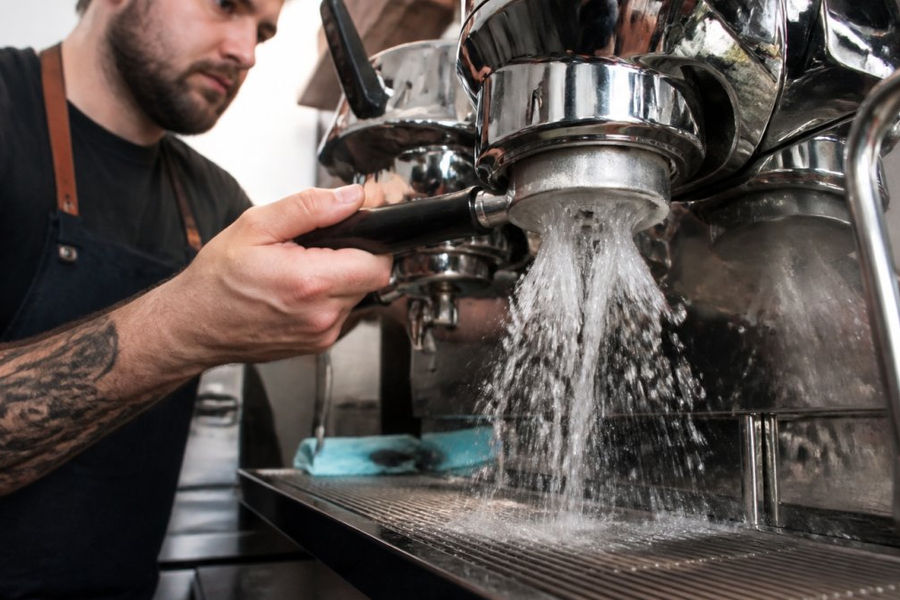
Backflushing reverses water direction through the group head's internal passages, dislodging oils and sediment that regular brewing leaves behind.
What you need:
Blind basket (solid, no holes)
Portafilter
Clean cloth or towel
The backflush process:
Insert the blind basket into the portafilter, make sure it's seated firmly
Lock the portafilter into the group head with a slight upward twist
Turn on the pump and let water flow for 2 seconds
Turn off the pump immediately
Wait 1 second for pressure to release
Repeat steps 3-5 five more times (total of 6 on-off cycles)
Remove the portafilter and wipe the group head opening with a damp cloth
The blind basket blocks water flow so pressure builds and forces water backward. Without it, you're just running water through an empty head.
Do this between every 5-10 shots during service, and always at the end of your shift. Commercial machines handle high volume, so backflushing becomes even more critical.
Common mistakes: using a regular basket instead of blind basket, running the pump too long (damages seals), forgetting to wipe the group head after flushing, or skipping the step entirely.
Weekly Cleaning and Maintenance Tasks
Weekly maintenance helps maintain commercial espresso machines by targeting areas that don't get touched during service but accumulate buildup. Dedicate one hour per week when the machine is cool and you have uninterrupted access.
Cleaning the Drip Tray and Surrounding Area
The drip tray collects water, grounds, and milk residue, a breeding ground for bacteria and mold if left dirty.
Steps:
Remove the drip tray from under the group heads
Empty any liquid or grounds into the sink
Scrub the tray with hot soapy water and a soft brush
Pay special attention to corners and edges where debris collects
Rinse thoroughly with clean hot water
Wipe the area under the tray where it sits
Dry the tray and replace it
If the tray has a removable grate, clean underneath; grates trap grounds fast. Check the drain line, if water pools, use a brush or pipe cleaner to clear blockage.
Water Reservoir and Filter Checks
The water reservoir supplies your machine. If it's dirty, your shots taste off and your machine gets damaged faster.
Weekly checks:
Remove the water reservoir from the machine
Empty any remaining water
Rinse the inside with hot water
Look for any visible buildup or discoloration on the walls
If you see mineral deposits, fill the reservoir halfway with hot water and let it sit for 15 minutes, then scrub with a soft brush
Rinse completely and refill with fresh water
Check the water filter, if your machine uses one, replace it according to manufacturer guidelines
Hard water clogs machines faster than soft water. Ask your supplier for a hardness report (often free). If very hard, you may need to descale more often than standard recommendations.
How to Descale a Commercial Espresso Machine
Descaling removes mineral buildup inside the boiler and passages. Most commercial machines need descaling every 1-3 months depending on water hardness.
Test your water hardness with an inexpensive kit.
Do not use vinegar to descale commercial espresso machines. Vinegar is acidic but weak, and it can leave residue that affects taste. Use a commercial espresso machine descaling solution instead.
Descaling steps:
Turn off the machine and let it cool for 30 minutes
Remove the water reservoir
Fill it with descaling solution mixed according to product instructions
Reattach the reservoir
Run water through the group head for 10 seconds, then stop
Wait 10 minutes, let the solution soak inside
Repeat the run-and-wait cycle 3-4 times over 30 minutes
Run the solution through the steam wand as well
After all solution is used, refill the reservoir with fresh water only
Run fresh water through all outlets for 5 minutes to rinse completely
Repeat the rinse cycle with a fresh reservoir of water
The soaking step is crucial, mineral deposits need contact time to dissolve. If not, you may need professional service.
Monthly Maintenance and Preventive Care
Monthly maintenance catches problems before they become expensive repairs. Spend 30 minutes once a month on these checks.
Inspection and Performance Checks
Look for signs of wear, leaks, or performance changes:
Check all visible seals and gaskets for cracks or deterioration
Look for water leaks around the group head, boiler, or pump
Listen for unusual sounds, grinding, squealing, or rattling
Test water flow, it should be steady and consistent
Check brewing temperature with a thermometer if possible, it should match the machine's setting
Test steam pressure, steam should be strong and consistent
Look for rust or corrosion on metal parts
Leaks, temperature problems, or weak steam are early warnings. Small problems become big ones fast on commercial machines.
Exterior Surface Cleaning
The machine's exterior gets splashed, touched, and exposed to dust:
Wipe down all stainless steel surfaces with a soft cloth and appropriate cleaner
Polish chrome or polished metal parts to prevent water spots
Clean the machine's feet or base, dust and grime accumulate there
Wipe electrical connections if they're visible, keep them dry
Check that all knobs and switches work smoothly
Commercial Espresso Machine Troubleshooting and When to Call a Technician
Some problems you can fix. Others need a professional. Knowing the difference saves time and money.
Problems you can usually fix:
Weak or slow shots, backflush the group head, check the grinder, verify water flow
Inconsistent temperature, descale the machine, check the water reservoir
Weak steam, descale the steam wand, check the water level
Leaking drip tray, empty and clean the tray, check that it's seated properly
Noisy pump, may be air in the system; run water for 30 seconds to purge
Problems that need a technician:
Water leaking from the boiler or internal connections
Machine won't heat up or heats very slowly
Pump runs but no water comes out
Electrical problems or burning smells
Cracks in the group head or boiler
Pressure gauge readings that don't match performance
Internal seals, heating elements, and pump components require specialized knowledge to repair safely. Attempting DIY repairs can cause more damage and void warranties.
Call a technician quickly if you suspect internal problems. The longer a damaged machine runs, the more expensive the repair becomes.
Creating a Commercial Espresso Machine Maintenance Schedule
Daily tasks (15 minutes):
Backflush group heads between shots and at end of shift
Clean portafilter and filter basket
Sanitize steam wand after each use
Wipe group head opening
Weekly tasks (1 hour):
Deep clean drip tray and surrounding area
Check and clean water reservoir
Inspect visible seals and connections
Run water through all outlets to clear debris
Monthly tasks (30 minutes):
Inspect for leaks, cracks, or wear
Test water flow and temperature
Test steam pressure
Clean exterior and polish metal surfaces
Every 1-3 months (2 hours):
Descale the machine (frequency depends on water hardness)
Annually:
Professional inspection and service (highly recommended)
Replace wear parts like group head gaskets if needed
Deep internal cleaning if not done during the year
Use a simple checklist or calendar. Check off each task when it's done. This creates accountability and gives you a record if problems develop, you can see whether maintenance was actually happening.
Train every person who uses the machine on the daily tasks. Backflushing and steam wand cleaning take 30 seconds each. There's no excuse to skip them.
Maintaining commercial espresso machines isn't complicated, but it's non-negotiable. Machines that get daily attention last years. Machines that are neglected fail within months. The difference comes down to consistent, simple tasks done every single day.
At Highpockets Coffee, we've worked with hundreds of cafes and restaurants across the Pacific Northwest. They backflush daily, descale on schedule, and call for professional service when something feels wrong. Request a quote today and let our team help you build a maintenance plan that keeps your operation running smoothly with reliable Nuova Simonelli espresso machines and expert repair support.
Frequently Asked Questions
How often should a commercial espresso machine be serviced?
Commercial espresso machines need daily cleaning (group head backflushing, portafilter cleaning, steam wand sanitization), weekly deep cleaning of the drip tray and water system, monthly descaling depending on water hardness, and professional service every 3-6 months. High-volume machines may need more frequent attention. Water quality directly affects service intervals, machines using hard water require more frequent descaling and professional inspection to prevent mineral buildup that damages internal components.
What daily maintenance does a commercial espresso machine need?
Daily maintenance includes backflushing the group head 5-10 times with a blind basket to remove coffee oils and residue, purging water through the group head before the first shot, cleaning the portafilter and filter basket thoroughly after each use, wiping the steam wand immediately after steaming milk, and emptying the drip tray. These tasks prevent coffee buildup, reduce bacterial growth, and maintain consistent brewing temperature and water flow. Neglecting daily cleaning causes accelerated wear and affects shot quality.
Can I use vinegar to descale my commercial espresso machine?
No, vinegar is not recommended for commercial espresso machines. Use only food-grade descaling solutions designed for espresso equipment. Vinegar's acidity can damage boiler seals, gaskets, and internal metal components over time. Commercial machines have sensitive boiler systems and water pathways that require pH-balanced descaling agents. Always consult your machine's manual or contact a qualified technician before descaling to confirm the correct product and procedure for your specific model.
What are common problems with commercial espresso machines and how do I fix them?
Common issues include slow water flow (caused by mineral buildup, descale immediately), weak or inconsistent shots (check water temperature, group head seal, and coffee distribution), steam pressure loss (water filter clogged or boiler needs servicing), and leaks from the group head or portafilter (worn gaskets or seals). Many problems stem from insufficient cleaning or water hardness. If descaling, cleaning, and gasket replacement don't resolve the issue, or if you notice boiler problems, leaks from internal components, or heat-up time changes, contact a qualified technician to avoid further damage.
Request A Quote


Comments